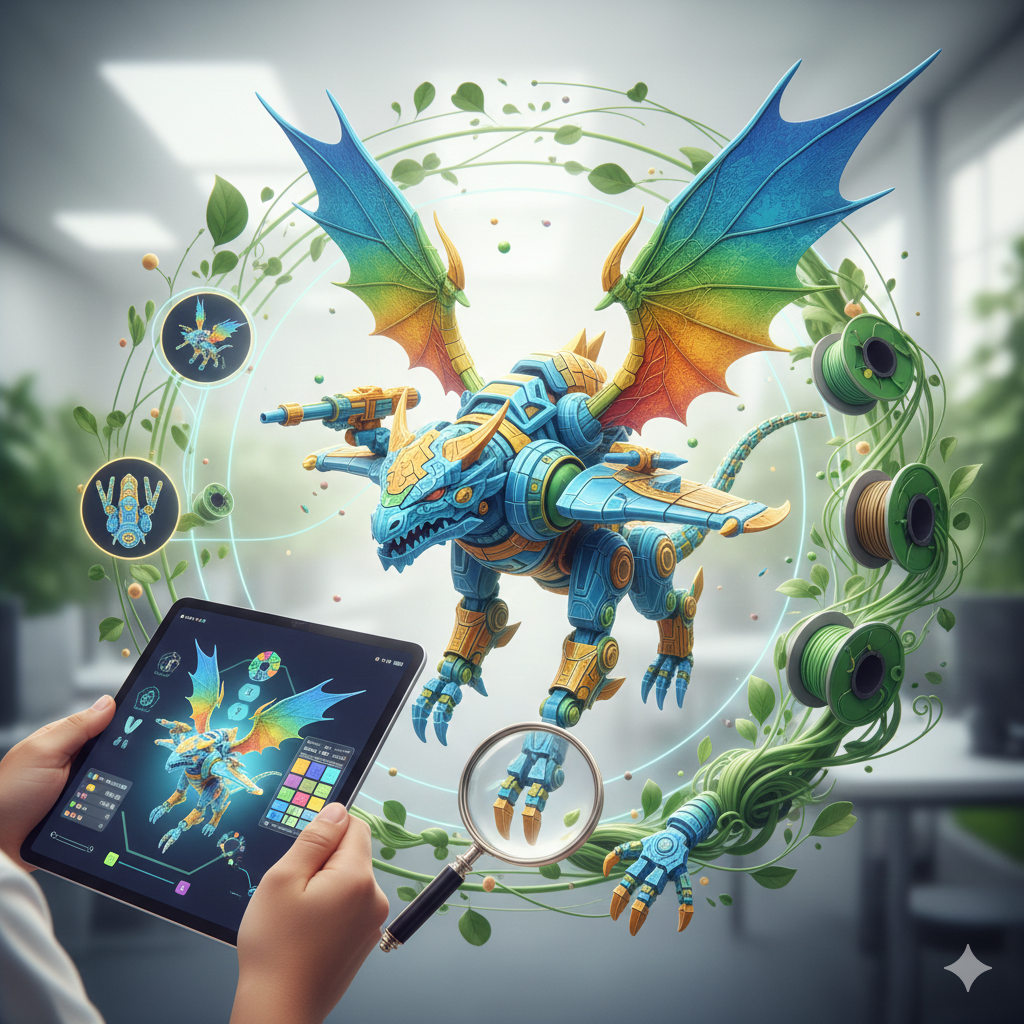
Ludosphere vs. Mass Manufacturing: The Future of Play
Welcome to Ludosphere, where we’re offering a new approach to toys. While many playthings are mass-produced and commercialized, Ludosphere provides a different option: high-quality, customizable, and eco-friendly toys created using 3D printing.
The Mass Manufacturing Paradigm
For years, the toy industry has relied on mass manufacturing, a process that often means high initial investment and a focus on commercialized, branded toys. This limits creativity and customization, not to mention the significant environmental impact from transportation and waste.
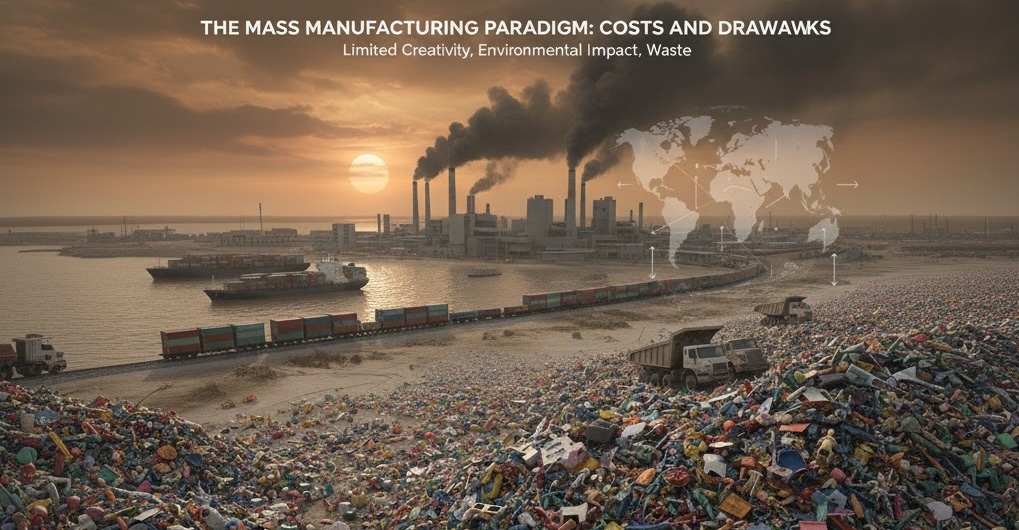
The reliance on injection moulding and large factory runs necessitates massive upfront capital for tooling and moulds, making small, innovative toy designs financially impossible. Furthermore, once a trend fades, large inventories of plastic toys often end up in landfills, contributing to a substantial waste problem. The global supply chain required to move raw materials, parts, and finished goods across continents also leaves a massive carbon footprint. This model favours volume and standardization over quality and personalized experiences.
The Ludosphere Difference: Customization and Quality
Ludosphere utilizes additive manufacturing, 3D printing, which fundamentally changes the economics and ethics of toy production. The core advantage of 3D printing is that it is a zero-tooling process. There are no expensive moulds to create, meaning we can prototype, iterate, and produce unique designs instantly and affordably. This allows for unparalleled customization. A child isn’t just buying “a spaceship,” they are designing their spaceship—choosing colours, accessories, and personalized elements. This level of involvement transforms a passive purchase into an act of creative ownership.
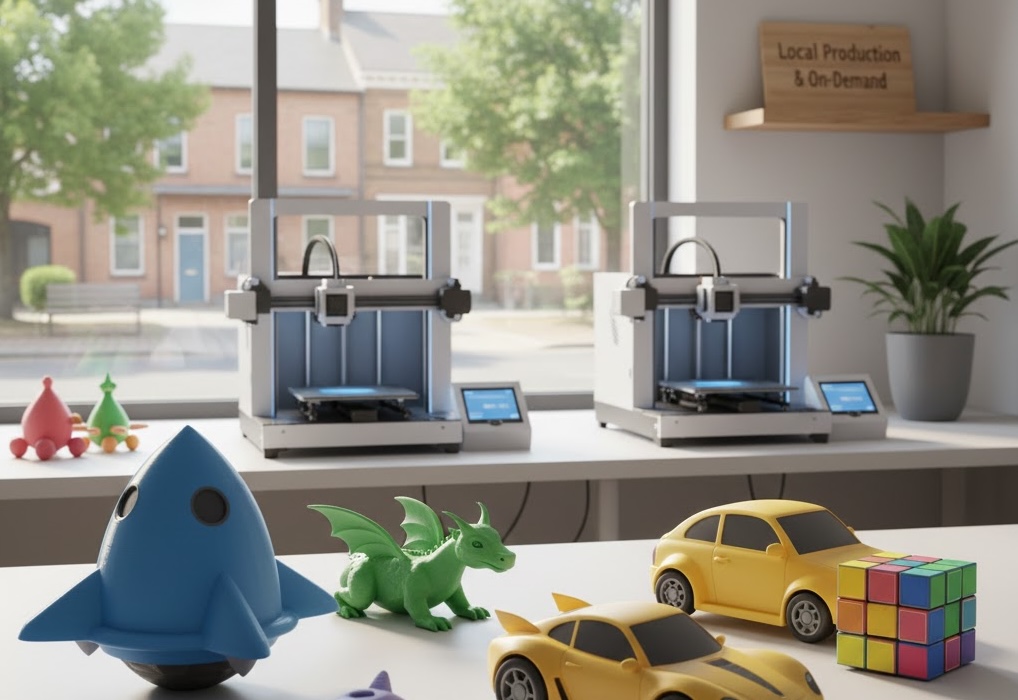
Moreover, 3D printing is inherently more sustainable. It is an additive process, meaning material is only used where the object exists, leading to dramatically reduced material and energy waste compared to the subtractive or waste-heavy processes of traditional moulding. Our toys are also produced locally in smaller, on-demand batches, eliminating the need for vast storage warehouses and minimizing transportation emissions.
A Sustainable Future for Play
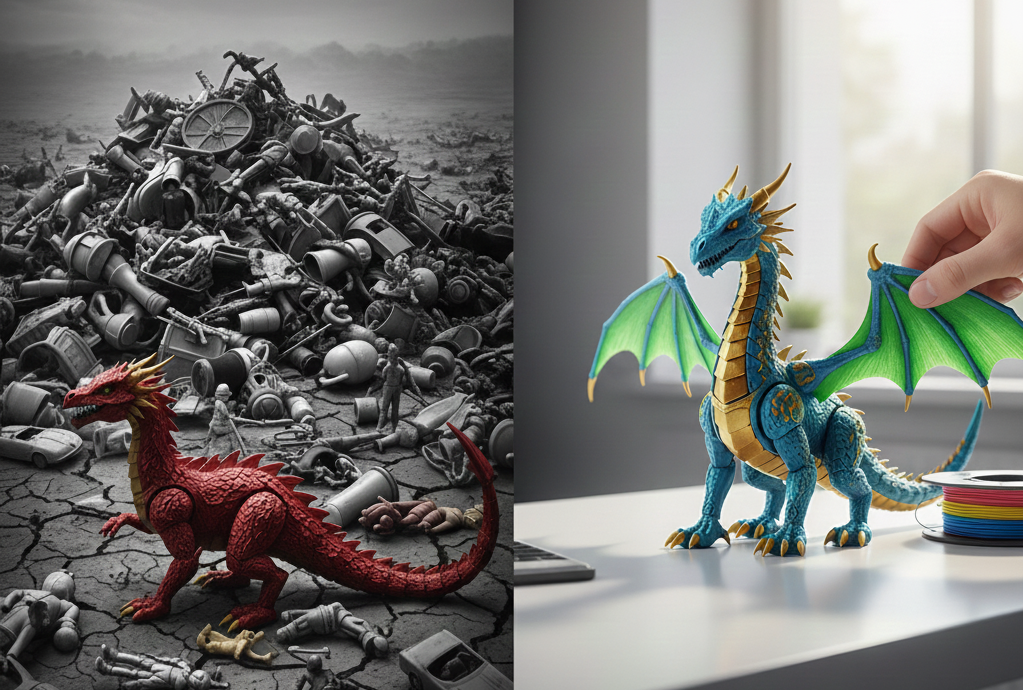
The fundamental shift from mass manufacturing to 3D printing represents a promising evolution in how we create and consume toys:
- Reduced Environmental Impact: By using sustainable, bio-sourced, printing filaments and minimizing transportation, Ludosphere significantly reduces the toy industry’s environmental burden.
- Unleashing Creativity: Our platform empowers kids, parents, and hobbyists to be the designers, fostering creativity and a deeper connection with their toys.
- Durability and Repairability: Our high-quality 3D printing allows us to create stronger, more durable items. In the event of a broken part, we can simply print a replacement piece on demand, promoting repair and longevity over disposable consumerism.
Ludosphere isn’t just selling toys; we’re offering a vision of mindful consumption, boundless creativity, and high-quality, personalized play that respects our planet.