High Contrast Toys for Newborns: What the Science Says
Your newborn’s world is a blur. In those first weeks of life, babies can only see about 20 to 30 centimetres in front of them—roughly the distance from your arms to your face during feeding. And the colours they see? Not the pastel rainbows that fill most nurseries. Newborns see in high contrast: bold black, white, and strong edges.
This is not a limitation. It is the starting point for an extraordinary journey of visual development—and the right toys can support every step of it.
How Newborn Vision Actually Works
At birth, a baby’s visual acuity is approximately 20/400—legally blind by adult standards. The retina is still developing, and the neural pathways between the eyes and the brain are being built in real time. The cone cells responsible for colour vision are immature, which is why newborns respond most strongly to high-contrast patterns.
Research published in Infant Behavior and Development has shown that newborns demonstrate a clear preference for looking at high-contrast patterns over uniform grey fields. A 1985 study by Banks and Salapatek in the Handbook of Infant Perception confirmed that contrast sensitivity is the dominant factor in what captures an infant’s visual attention in the first months of life.
In simpler terms: your baby’s brain is wired to seek out bold edges and strong contrasts. It is how they begin to make sense of shapes, faces, and the physical world around them.
What the Research Says About Visual Stimulation
The first three months of life represent a critical window for visual development. During this period, the visual cortex is forming connections at a staggering rate—up to 700 new neural connections per second, according to the Harvard Center on the Developing Child.
Appropriate visual stimulation during this window matters. A 2004 study in Developmental Science found that infants who received structured visual experiences showed faster development of contrast sensitivity and pattern recognition. The key word is appropriate—not more stimulation, but the right kind.
High-contrast toys provide exactly that. They offer clear, bold patterns that match what a newborn’s eyes are ready to process, without overwhelming a nervous system that is still learning to filter input.
How High Contrast Toys Support Early Development
Visual Tracking
One of the earliest visual milestones is tracking—the ability to follow a moving object with the eyes. High-contrast toys give newborns a clear target to lock onto, making tracking practice natural and engaging. Move a black-and-white card slowly across your baby’s field of vision, and you will see their eyes follow. That simple exercise strengthens the eye muscles and builds coordination between both eyes.
Tummy Time Motivation
Ask any parent about tummy time and you will hear the same thing: babies do not love it. Placing a high-contrast toy at eye level during tummy time gives your baby something compelling to look at. This encourages them to lift their head and engage, building the neck and core strength that are prerequisites for rolling, sitting, and crawling. The visual reward makes the hard work worthwhile.
Focus and Attention
High-contrast patterns hold a newborn’s gaze longer than muted or complex images. This extended focus is not passive—it is active brain work. Every second your baby spends studying a bold pattern, their brain is processing edges, shapes, and spatial relationships. These are the building blocks of visual perception that will serve them for life.
Age-by-Age Guide: What to Look For
0–1 Month: Bold and Simple
In the first weeks, keep it simple. Large, bold black-and-white patterns work best—think thick stripes, concentric circles, and checkerboard designs. Place cards or a soft cube 20–30 cm from your baby’s face. At this age, they are not reaching for toys; they are just learning to see them. Our Baby Cards ($22) are designed for exactly this stage, with bold patterns sized to match newborn visual acuity.
1–3 Months: Tracking and Reaching
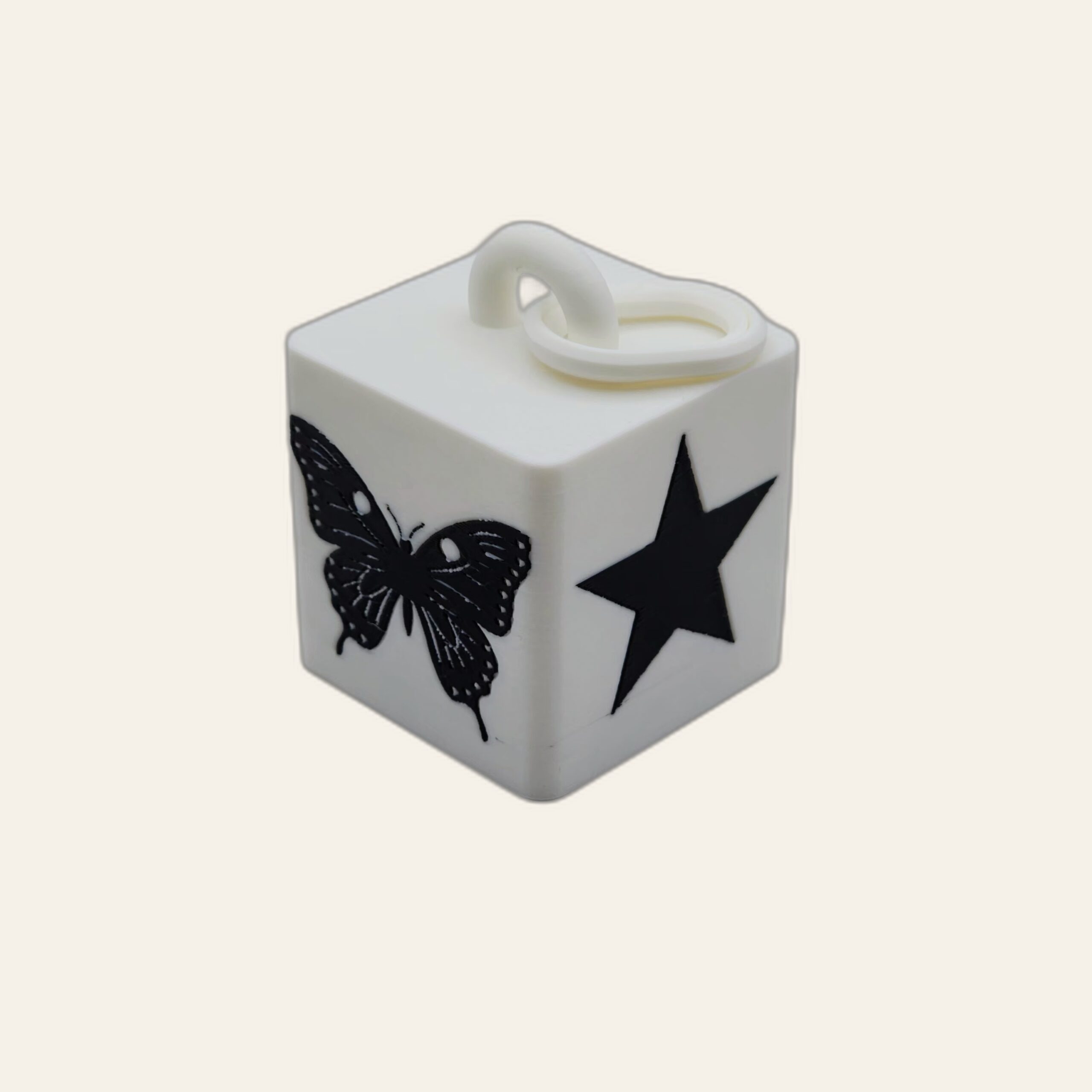
By six to eight weeks, your baby begins tracking moving objects. This is the time to slowly move high-contrast cards or toys across their line of sight. You can also introduce three-dimensional objects. The High Contrast Baby Cube ($28) works beautifully here—each face offers a different pattern to explore, and the cube shape encourages early reaching and grasping as motor skills begin to develop.
Around the two-month mark, babies also start to distinguish red from the high-contrast background. You may notice them drawn to a single splash of colour against black and white. This is the beginning of colour vision coming online.
3–6 Months: Colour and Complexity
By three to four months, colour vision is rapidly improving. Babies can now see across the full colour spectrum, though they still prefer bold, saturated colours over pastels. This is a natural transition point: continue using high-contrast toys, but begin introducing colourful options alongside them. The contrast toys remain valuable for tummy time and independent play, while new colours expand the visual vocabulary.
By six months, most babies have developed depth perception and can see across a room. The foundation built by high-contrast visual stimulation in those early months has done its job—your baby’s visual system is now ready for the wider world.
What Makes a Good High Contrast Toy?
Not all black-and-white toys are created equal. Here is what to look for:
- True high contrast: Crisp black on white (or white on black). Grey-toned or low-contrast “minimalist” designs miss the point—newborn eyes need strong edges.
- Appropriate pattern size: Patterns should be large enough for a newborn to resolve. Tiny, intricate designs look stylish but are invisible to a baby under three months.
- Safe materials: Newborns mouth everything. Look for non-toxic, BPA-free materials with no small parts. 3D-printed toys made from PLA (a plant-based plastic) are an excellent option—food-safe, durable, and free from the chemical concerns associated with conventional plastics.
- Multiple patterns: Variety matters. A cube with different patterns on each face, or a set of cards with varied designs, gives your baby more to explore and prevents habituation.
The Ludosphere Approach
We designed our Baby Cards and High Contrast Baby Cube with this developmental science in mind. Every pattern is sized for newborn vision. Every material is chosen for safety. And because we 3D-print locally in Canada, we can ensure quality control at every step—no mass-produced overseas supply chains, no mystery materials.
These are not novelty items. They are tools for the most important work your baby is doing right now: building the visual system that will support every other kind of learning to come.
The Bottom Line
High-contrast toys are not a trend—they are a response to how newborn vision actually works. The science is clear: babies are born seeking bold patterns and strong edges, and providing them with appropriate visual stimulation during the first months of life supports healthy development of the visual cortex, eye coordination, and early attention skills.
You do not need a nursery full of toys. A few well-designed high-contrast pieces, used intentionally during tummy time, feeding breaks, and quiet play, can make a real difference. Start simple. Follow your baby’s cues. And trust that every time they lock their gaze on a bold black-and-white pattern, their brain is doing remarkable work.